Part 2 of our Publishizer series. In Part 1, we talked about the why behind Pivot-Quest. This one is about the 45 days that nearly broke us, what they cost emotionally, and the bigger thing they revealed about why people are so quietly desperate to change their lives.
We raised $17,055 on Publishizer. 945 preorders. 189% of our goal.
Those numbers are real, and we’ll tell you exactly how we got them, because if you’re an author, you want the tactics and you’ve earned them. But here’s the thing we didn’t expect when we started: the campaign was never really about the book. It was about how many people were quietly waiting for permission to change their lives.
That’s the story. The mechanics are just how we stumbled into it.
So here’s both: six lessons from the 45 days, and the one discovery underneath all of them.
1. Your network is the campaign. Strangers are a fantasy.
We opened three WhatsApp groups in concentric circles: 90 close contacts, then 150, then 300. Ninety percent of the first circle bought, and many bought more than one copy. The third circle was activated almost entirely because of what happened in the first two.
LinkedIn did nothing. Paid Meta ads did nothing. What worked was personal conversations, one at a time, with people who already knew us.
Think of your network like a tree. The trunk is visible, but underground, the roots reach further than you realize. Most authors spend their energy trying to plant new trees, strangers on social media. Your existing root system is bigger than you think, if you’re willing to use it.
The uncomfortable corollary: if your network is shallow, your campaign will be shallow. No clever marketing fixes that. Which leads to something we only understood later, please see the last lesson.
2. The bulk buyer no one talks about.
In the second circle was a client and friend who runs a company. He read the campaign page and made a decision: this was exactly what his team needed. He bought 500 copies. One person. One decision. Roughly half our total.
The lesson most nonfiction authors miss: somewhere in your network is a person who could buy 50, 100, or 500 copies for their organization. They won’t volunteer. You have to ask. Make a list of everyone you know who leads a team. Ask every single one.
3. The slump hits after week one. And it’s an emotional problem, not a strategic one.
Week one is your enthusiasts, the people who’d buy the moment you announced. They come in fast, and you feel like a genius. Then week two arrives, the dashboard slows, and you realize that to keep going, you have to ask people who didn’t volunteer.
If you’ve never done this, it’s harder than it sounds. You’ll feel like a salesperson messaging people you love. You’ll ask someone to spend twenty dollars on your book, and they won’t, and you’ll have to decide not to let that mean anything beyond what it is.
We both had versions of this. Luis’s came when his nephew quietly didn’t buy, while the rest of his family did. There’s a particular weight to support you expected and didn’t receive, a clean “no” you can process and move past, but silence offers no path. It stung more than any marketing failure.
But that private silence turned out to be a clue we didn’t recognize yet. Hold that thought — it comes back in Lesson 5.
4. We launched in the “wrong” month. It worked anyway.
Every guide says don’t launch in August; people are on vacation, business goes quiet, especially in Europe and Latin America, where we live. We launched on August 1st and ran for 45 days.
What actually happened: because everyone else was quiet, our messages landed. Friends on holiday had time to read. The lesson isn’t “launch in August.” It’s: match your timing to where your network actually pays attention.
5. The currency that mattered most wasn’t dollars. It was permission.
Here’s where the campaign stopped being a campaign.
Juliana:
I’ve spent most of my career helping other people tell their stories, brands, institutions, and communities. But standing in front of my own network, asking for support for something this personal, felt entirely different. Every preorder represented trust. The book wasn’t finished. There was no guarantee. People weren’t buying a product; they were backing a belief, a mission, and in many ways, they were backing me.
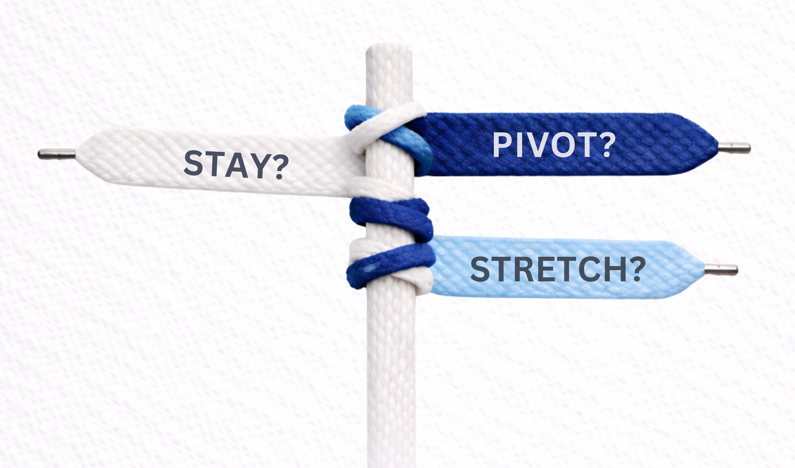
After multiple career pivots of my own, I thought I understood reinvention. What surprised me during the campaign was discovering how many people were standing at the exact same crossroads, quietly wondering if they were allowed to want something different.
Because what struck me most over those 45 days was how many private messages we received from people who weren’t just supporting a book. They were telling us their own stories. Burnout. Feeling trapped. Wanting something different but being afraid to say it out loud. Again and again: “I’m thinking about making a change” — something they hadn’t told their colleagues, their friends, sometimes not even their families.
And then there was one interview that changed the way I thought about this entire project.
I met Eileen. She was 82 years old. By that point in her life, she had reinvented herself nearly twenty times. New careers. New chapters. New identities. New ways of contributing.
As I listened, I kept thinking: at 82, she could have easily decided she’d done enough, that she’d earned the right to stay where she was. But she hadn’t. She was still curious. Still learning. Still questioning. Still imagining what might be next.
That was my aha moment. Reinvention isn’t something we do once or twice in a lifetime. It’s part of being human, the desire to grow, to learn and unlearn, to move beyond our fears, to keep finding new ways to contribute.
Eileen made me realize that Pivot-Quest was never really a book about career changes. It’s a book about a universal human instinct: the belief that no matter our age or circumstances, there is still more for us to become and more for us to give.
And here’s the pattern that connected everything. One of the most surprising discoveries was how many people supported us privately rather than publicly. It mirrored exactly what we’d seen in our research. Career transitions begin as silent conversations people have with themselves. Before anyone announces a pivot, they need permission to imagine one. The quiet support, even the quiet non-support, was the same human truth showing up everywhere: people guard their career doubts like secrets.
After interviewing hundreds of people around the world, I’ve come to believe the greatest barrier to change isn’t lack of skill, opportunity, or money. It’s the belief that we’re the only ones feeling this way. The campaign showed me the opposite. We are surrounded by people standing at their own crossroads, waiting for someone to say out loud that change is possible.
6. “Marketing” didn’t build this. Years of relationships did.
We said earlier that LinkedIn and ads did nothing, that almost none of it came from marketing. That’s true on the surface. But underneath it is a truer version.
The relationship-building we’d done over years, that was the marketing. We just didn’t call it that while we were doing it. Networks can be transactional. What carried this campaign was something relational: trust accumulated slowly, long before we needed it.
There’s a lesson here we didn’t expect and won’t forget: community builds courage. The people who backed us weren’t responding to copy. They were responding to a relationship. And in return, many of them found the courage to admit — often for the first time, often privately, that they wanted to change something too.
* * *
What’s next
The campaign closed; the real work just started. Before our launch the last week of August 2026, we’re:
- Finishing the manuscript and workbook typesetting.
- Upgrading our web platform — a new home for the book and the community
- Beginning a wider pre-sales campaign, built on the same relationship-first principle.
- Building the Pivot-Quest community platform — the peer space 38.8% of our research respondents said they wanted most.
- Defining cities for our book tour and reaching out to venues, organizations, and partners to host or co-create stops.
- Preparing media and podcast outreach.
Three asks before you go:
- If you haven’t pre-ordered, the campaign page is here. The book ships in late August.
- If your organization wants bulk copies for a team going through change, reach out directly (hello@pivot-quest.com). We learned in this campaign how transformative a single institutional order can be, both for the team and for the authors.
- If you’d host a book tour stop, know a podcast we should be on, or run a community we should serve — we want to hear from you. The next 12 weeks are about building the bridges.
* * *
To everyone who pre-ordered, shared, messaged, or quietly rooted for us: you didn’t fund a book. You proved its thesis: that no one navigating change is as alone as they feel. We are still immensely grateful and slightly stunned. We will spend the next decade trying to deserve it.
And if you’re an author looking at a blank Publishizer page wondering if anyone will care: the answer depends on whether you’re willing to ask the people who already do. But here’s what we’d tell you that we wish someone had told us — what we discovered wasn’t that networks build campaigns. It was that people are hungry for honest conversations about change. The book just gave them a reason to start one.
That’s the real campaign. Yours is waiting in the relationships you’ve already built.
Start there.
* * *
Luis R. Baptista and Juliana N. Pereira are the authors of Pivot-Quest, launching August 2026. Between them, they’ve navigated careers across the Americas and Europe, and now, three WhatsApp groups they’ll never look at the same way again.