
Dallas Was my Death
“Girl Off the Grid: Dallas Was My Death is a raw, poetic memoir of collapse and rebirth. After heart failure ends her high-powered Dallas life, Halsey follows a mystical call to the mountains. Each chapter reveals a life lesson and oracle card — a guide for every woman who’s given too much and is ready to rise.”
Ended
Millions of women are silently unraveling under the weight of doing it all. High-functioning burnout is an epidemic — but it’s rarely talked about until it’s too late. I know, because I died on my 52nd birthday. Girl Off the Grid: Dallas Was My Death is a memoir born from cardiac arrest caused by stress and emotional suppression — a warning and a wake-up call for every woman who’s ever sacrificed her soul to succeed.
More than a survival story, this book is a spiritual reckoning. Each chapter weaves raw memoir with a soul lesson, culminating in a hand-illustrated Life Lesson Oracle Card. The cards and stories together offer emotional clarity, intuitive insight, and a path to reclaiming your truth. Takeaways include:
I’m Halsey Wilder — a former Dallas entrepreneur who walked away from everything after my heart stopped. I now live off-grid on a sacred mountain, channeling Oracle cards and helping women turn their breakdowns into breakthroughs. This story is not just mine — it’s medicine for every woman on the edge. The time for this book is now.
This book is written for spiritually curious, emotionally exhausted women ages 35–60 who are navigating burnout, loss, or major life transitions — especially those seeking healing, empowerment, and deeper purpose beyond conventional success.
“A powerful and poetic memoir that will crack you open and light you from within.”
— Advance Reader Review
“Halsey Wilder’s voice is as raw as it is radiant. She’s lived it, survived it, and now she’s guiding us home.”
— Indie Author Network
“For every woman who gave too much — this book will help you take your life back.”
— Heart & Soul Reads
“More than a memoir — this is a lifeline for the burned-out and brokenhearted.”
— Author Endorsement (placeholder)
“I cried, I laughed, I circled passages I’ll never forget. Girl Off the Grid isn’t just a story — it’s a reckoning.”
— Early Beta Reader
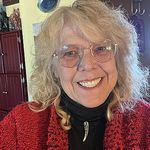
Halsey Wilder is an LGBTQIA+ memoirist, oracle deck creator, and former Dallas entrepreneur who now lives off the grid in rural Colorado. After surviving a near-fatal case of stress-induced heart failure on her 52nd birthday — and losing everything she thought defined her — she discovered the art of manifestation.
Through her own journey of rebuilding from nothing, Halsey developed a practical, heart-centered manifestation method that she now shares with others. Her upcoming book, The Art of Manifesting My Life Off the Grid, blends raw memoir with actionable techniques so that anyone desiring change can create a life that feels authentic, free, and soul-aligned. Her debut memoir, Girl Off the Grid: Dallas Was My Death, is a poetic reflection on trauma, identity, and spiritual rebirth.
With decades of experience in high-pressure business and a lifetime of resilience, Halsey now empowers others to reclaim their health, intuition, and dreams. When she’s not writing, she channels her Life Lesson Oracle Cards — a mystical, hand-illustrated deck born from the same transformative journey — and shares her story through speaking, workshops, and creative collaborations.
Dear Author,
You worked hard to write your manuscript, and you know that expert assistance is needed to ready it for the market. But perhaps you didn’t realize that working with a publisher is no longer necessary—especially publishers who charge fees to produce your book upfront and "share" more of your revenue whenever a book is sold.
1106 Design is an author services company that has served over 4,000 authors since 2001. We offer all the editorial and design services you’d expect from a publisher, transforming your manuscript into a polished book. But here's the difference: we help you secure print-on-demand printing and worldwide distribution in YOUR name. This means you'll earn several dollars more for every book sold instead of a meager “royalty” and never lose control of your book or your book files.
We understand that your book is not just a passion project but also a potential source of income. No two books or authors are alike. That's why we'll customize a package of services tailored to your needs at affordable prices, starting at $5,555. And here's the best part: after this one-time investment, every penny of revenue from book sales is deposited directly to your bank account, never to ours first.
If this sounds like a better way to publish your book, I invite you to browse our services, design samples, no-surprises pricing, outstanding customer reviews, and educational articles at https://1106design.com. You can download a free PDF of my book, "Publish Like the Pros: A Brief Guide to Quality Self-Publishing and an Insider's Look at a Misunderstood Industry," and request a free, no-obligation consultation.
1106 Design is rated A+ by the Better Business Bureau. We are a “Highly Recommended Expert” at IngramSpark.com and rated "Excellent" at Alli, The Alliance for Independent Authors, at SelfPublishingAdvice.org. Alli's "watchdog list" of the best and worst publishing services companies is an invaluable resource.
How can we serve you today?
Sincerely,
Michele DeFilippo, owner

100 copies • Completed manuscript.
eBooks2go, Inc. was founded in 2011 to provide the missing link for all your publishing needs. Our end-to-end solutions provide the guidance and support that enable publishers and independent authors to pursue their passions. To date, we have helped more than 1,000 authors and 250 publishers worldwide. We offer an array of simple and affordable solutions to assist self-publishing authors at every stage of the book publishing process. Our comprehensive service offering includes editing, print and eBook production, book marketing, cover designs, ISBN registration, and even website designs. We are a single source for all of your publishing needs.

2
The End of The Innocence (His name was Rose)
The day had been quiet, as most days were when I wandered to the lake. It was my secret place, the one spot where the world seemed to slow down and let me breathe. The water stretched out before me, still as glass, reflecting the sky with a quiet calm that matched the emptiness inside me. I never really felt like I belonged anywhere, but out here, surrounded by nothing but nature and solitude, I didn’t feel so alone.
I was lost in my thoughts when I saw him—just a figure at first, small against the wide expanse of the lake. As he got closer, I could see more clearly. He was an older man, maybe in his forties or fifties, but there was something in his walk that made me think he wasn’t as harmless as he appeared. It wasn’t fear that I felt, not at first anyway, just curiosity. He was carrying a little black dog, the kind of dog that seemed like it could have come from a fairytale, small and fluffy with fur that looked almost too soft to be real.
My heart skipped a beat. If there was one thing in the world that I loved more than food, it was animals. The way the dog looked at me—those big, trusting eyes—made me feel something warm, something I hadn’t felt in a long time. For a moment, I forgot about the way the world usually made me feel. The man stopped a few feet away from me and gently set the dog down, and it trotted over to me eagerly, tail wagging.
“Hey there,” the man said, his voice deep but friendly. “You like dogs?”
I smiled, the warmth of the moment making it easy to talk to him. “Yeah,” I said softly, bending down to pet the little dog. Its fur was soft, and it nuzzled my hand as if it had been waiting for me all along. “I’m Rose,” the man continued, his voice carrying a certain weight. “And this little guy is Buddy.” Rose? I had never heard of any man named Rose before. The name was odd, almost like something out of a storybook, but I didn’t care. I didn’t need to know who he was or where he came from. What mattered in that moment was that he was talking to me, something no adult had ever done with real interest before. Most of them would pass by without a glance, too busy to care. But not Rose. He was here, and he seemed to want to talk to me.
“I’m not supposed to talk to strangers,” I said, the rule my mother had drilled into me playing in my mind.
“Well, that’s a smart rule,” Rose said, crouching down next to me. His smile was warm, though there was something behind it that I didn’t fully understand. “But not all strangers are bad. You can trust me. I’m just a friend.”
I wanted to trust him. I really did. Maybe because no one ever bothered to be my friend. Maybe because I didn’t know what it felt like to have someone take the time to see me for who I was. I hadn’t had a true friend in as long as I could remember. The promise of friendship, of kindness, was like a beacon to someone like me—someone who spent far too many hours alone.
Rose continued, his voice soft but persuasive. “You want some Kool-Aid? It’s just up at my cabin, not far from here. You can meet Buddy, and we can chat. I bet we have a lot in common.”
The mention of Kool-Aid made my stomach rumble. It sounded like a small treat, something special. I’d never been to a grown-up’s cabin, and the idea of having something of my own to drink—something that wasn’t just water from the lake or old soda cans I found around—felt exciting.
“Okay,” I said, standing up. “I’ll come with you.”
He smiled again, and something in his expression made me feel like I had made the right choice, like everything was going to be okay. He took the dog by the collar, and I followed him, the sound of our footsteps crunching on the gravel path leading up the little hill toward the cabin.
The cabin was small, tucked away among the trees, with a wooden porch and a slightly sagging roof. It looked like a place where you could be alone, where the world wouldn’t reach you. I followed Rose up the stairs and into the cabin. The door creaked as he opened it, and a rush of cool air greeted me as we stepped inside.
Inside, the cabin was darker than I had expected. The smell of wood and something else—something faintly metallic—lingered in the air. Rose led me to the kitchen area, where a pitcher of Kool-Aid sat on the counter. He grabbed a glass and filled it with the bright red liquid, handing it to me with a smile.
“Here you go,” he said, watching me carefully as I took a sip. The taste was sweet, too sweet for my liking, but I didn’t mind. The moment felt too important for me to question anything.
I drank, feeling the cool liquid slide down my throat, and that’s when everything changed. That’s when I felt it, that shift, something I couldn’t explain but could feel deep in my gut. The air in the room felt thicker now, the light dimmer, and the warmth of the cabin seemed to close in around me.
Rose’s eyes watched me, studying me in a way that made my skin crawl. His smile was no longer friendly, but something else—something predatory. I wanted to leave, but I didn’t know how to. My innocence—my trust in the world and in people—was slipping away, piece by piece, as the room grew smaller, and my heart began to race.
“Let’s sit down,” Rose said, his voice lower now, the words carrying a weight I hadn’t noticed before. I wanted to say no, to run out the door, but my body felt frozen. I couldn’t explain it, but I couldn’t move. The Kool-Aid tasted fine, didn’t it? Or maybe it was something else, something I couldn’t put my finger on. But in that moment, sitting at that kitchen table, everything I had known about safety and trust began to unravel.
In that quiet, dimly lit cabin, I learned a truth I would carry with me forever—the world could be a dangerous place, and sometimes, the people who seemed the kindest had the darkest intentions.
The innocence I had clung to, the simple belief that people were good, was slipping away with every passing second. And for the first time, I understood that not everyone who offered you kindness was your friend.
The air outside was still and heavy as I stumbled from the cabin. My legs felt like lead, and my chest ached with a tightness I couldn’t explain. I didn’t understand what had just happened. I couldn’t make sense of the way my body felt, the strange pull between confusion and something darker. I burst through the door to his porch and bolted down the stairs, not thinking, just running. My feet hit the gravel path, sharp stones digging into my bare skin, but I didn’t care. I ran, faster and faster, until I could no longer hear his voice behind me, until the cabin and the lake were nothing but a blur in my peripheral vision.
When I finally stopped, I collapsed onto a large rock by the shore, it's cool surface pressing against the heat of my skin. My breath came in short, ragged bursts as the tears that had been threatening to spill for so long finally broke free. But I didn’t cry out loud. No, I just sat there, staring at the lake that had once been my sanctuary, feeling the weight of what had just occurred pressing down on me like an iron blanket.
My thoughts were a chaotic mess. I felt ashamed. Dirty. My body was bruised with an invisible mark that I couldn’t scrub away. But I didn’t know what had happened. Not really. The man, Rose, had been so kind at first. And when it was over, when I had fled from his cabin in a panic, I was left with a thousand questions that had no answers.
Was this what adults did when they loved each other? Maybe this was how things worked between them. I didn’t know. I didn’t love him, not at all. I didn’t even know him. But he had made me feel like I mattered for the first time, like I was special in some way. That was what had drawn me in, right? That was what had made me follow him.
I kept thinking that maybe I had done something wrong. Maybe it was my fault. Maybe if I had been stronger, or smarter, or if I had just listened to that voice in my head that had whispered that something wasn’t quite right, maybe none of this would have happened. But it had happened, and there was no going back. No way to undo the way I felt, the way I had been changed forever.
For weeks after that day, I wandered around like I was in a fog. I moved through life, but it was like everything was happening to someone else, someone who wasn’t me. I didn’t laugh, I didn’t cry, I didn’t feel anything the way I once had. I felt like I was drifting through a dream—or maybe a nightmare. Nothing seemed real anymore.
And then, one day, I saw him again. Rose’s little black dog. It was darting in and out of the trees near the cabin, barking excitedly as it sniffed the air and dashed around like nothing had changed. The dog didn’t know what had happened. It was just a little creature, living in a world where everything still made sense, still had meaning. I couldn’t ignore it. Something in me twisted at the sight of the dog, like it was a reminder of that day, of the man, of the lie that I had been fed.
I didn’t know what to do. What was I supposed to feel? I had tried to push it all down, to pretend that nothing had happened, but seeing the dog again stirred something in me—something dark and suffocating. I couldn’t just leave the dog there. I couldn’t just forget.
So, I went back. I didn’t think, I just did. I walked back up that same path, my legs shaking under me, but I couldn’t stop myself. I wasn’t sure what I expected, but I felt like I needed to go back. Not just once, but several times. I kept going, each time hoping that maybe, just maybe, I could fix things. Maybe if I went back, it would all make sense. I could talk to the dog, or the man, or someone, and make everything go away. But it never worked that way.
Each time I walked up that hill, I felt like I was digging myself deeper into a hole. I felt like something inside me was broken, like I was trapped in a cycle that I couldn’t escape. And each time, the same thought would creep into my mind: This is my fault. I had let him do it. I hadn’t stopped him. I hadn’t screamed or run. I had stayed there, frozen, and let it happen. And now, I was paying the price.
But the worst part wasn’t the guilt, or the shame. It wasn’t the fear that gnawed at my insides when I thought of what had happened. The worst part was what came next. The fear of telling anyone. Of telling my mother. I was terrified of what she would say, of how she would look at me, of how everything in my world might shatter if I told her the truth. Would she be angry? Would she blame me, too?
I couldn’t bring myself to speak the words, to voice the darkness that had wrapped itself around me. So, I kept quiet. I kept going back, hoping that somehow, something would change, that somehow, the world would return to how it was before. But nothing ever did. And I knew, deep down, that nothing ever would.
It was as if I had been marked. Like I was carrying a secret that I couldn’t tell anyone, a burden too heavy to bear, but too real to ignore. And in the silence of my own thoughts, I began to wonder if I would ever be able to escape it. If I could ever find a way to stop running, to stop feeling so broken.
The years that followed felt like a blur, a series of moments stitched together by confusion and regret. I tried to move on, but some things don’t just fade away. They burrow deep into your heart, your mind, like splinters that never quite heal. My childhood was lost in that space between what was and what could have been. I wondered if anyone could see the changes in me, if anyone could tell that I wasn’t the same little girl who once ran barefoot through the grass or laughed without a care.
I wore a mask. It was easy to do. People expected you to grow up, to move past things. But how do you move past something that stays with you, a secret that holds you hostage?
I remember trying to ignore the flashes of him, the way his face would appear when I closed my eyes. It didn’t matter how much time passed, he was always there, lurking in the shadows of my thoughts. And yet, I couldn’t bring myself to speak of it, not fully, not with anyone. I felt like I was betraying a part of myself by giving it voice.
But the guilt—oh, the guilt—it stayed. It grew with every year that passed. I kept wondering if things might have been different if I had told someone sooner. What if I had spoken up, or fought back harder, or screamed louder? What if I hadn’t carried that secret alone, and had let someone help me before it became so heavy?
And then there were the other girls. The ones I met as I grew older, the ones who shared their own stories. It was strange, hearing their experiences, and yet, comforting in a way I never expected. The stories were different but the pain—the same. Some had been victims in ways I couldn’t imagine, but they understood the silence, the shame, the feeling of being broke.
I met people who helped me see that I wasn’t the only one who had lost something, even if we didn’t talk about it. There was something about shared pain that had a way of making the world feel smaller. More human. But even with their support, even with time, I still couldn’t shake the feeling that I was damaged beyond repair.
Maybe, in some way, I had been broken. But I was still here. And perhaps, just perhaps, that meant there was hope for healing, even if it wasn’t something I could see yet. I thought maybe if enough time passed, I’d forget his face and his name. Neither happened. His name was Rose.
Chapter 4 – Adulting 101: Out of the Closet and Into the Fire
As soon as I could work, I did. There were no talks about college. No dreams of dorm rooms or degrees. Just work. That’s what we knew.
I tried college—sort of. Signed up for the fun stuff: astrology, stage lighting, sculpting. Classes that stirred something in me but didn’t fit into any mapped-out future. Not that anyone ever explained what college was for. Not at school. Not at home. It felt like a path meant for other people.
Only our older brother, Albert, went. Four years ahead and the only one who got the memo. Me and Gary, we just knew: if we wanted anything, we had to work for it. Starting now.
We could’ve stayed home, saved money. Maybe played it safe, like Albert. But we were hungry—for freedom, for something of our own. Even if we didn’t know what that something was.
When Daddy died in ’67, he left us each a little something—about $5,000. In 1982, that was enough to feel like possibility. Momma handed it to us like a passing of the torch.
Gary made a smart move. Opened a vacuum shop. He used to joke, “Everyone’s got dirt—I’ll always have money.” I had to respect that. He was younger but already knew how to turn it into a paycheck.
Me? I was still trying to find something that felt like mine.
One thing I knew for sure: I wasn’t going to be a waitress.
Then one day, my luck seemed to turn. I had applied all over Dallas, and finally, the phone call came.
“Hello,” said a lady’s deep, smoky voice. “Is this Ms. Wilder?”
With excitement, I answered, “Yes.” She told me she wanted me to come downtown to meet about a job as a nighttime alarm dispatcher. I was thrilled.
About an hour later, my Aunt Betty called. Now, my mother’s youngest sister was a bit… deviant at times. She had this strange jealousy about Mom and our family. Aunt Betty would move just blocks away from wherever Momma was, like she was trying to keep tabs. That day, I was eager to tell her about the job, but I’ll never forget her cruel response:
“Oh, you won’t have that job two weeks.”
Call it oppositional defiance disorder or whatever you like, but I was determined to prove her wrong—and I did. What started then became a 22-year, well-paying career. From $4.67 an hour to over six figures by the time I left.
Working nights wasn’t easy. The shift would rattle your bones if you let it, but I found something strangely comforting about the quiet hours when the rest of the world was asleep. Maybe it was the stillness, or maybe it was that I could finally hear my own thoughts. I became the calm voice on the line during someone else’s chaos. Burglar alarms, fire systems, panic buttons—I took them all, never knowing what was waiting on the other end of a beep.
I liked the responsibility. I liked knowing I was good at something. I didn’t have a fancy degree or a five-year plan, but I had instincts. Street smarts. And a deep need to prove that I was more than what people assumed about me.
What started as a nighttime dispatcher job turned into a full-blown career. I stayed in that industry for twenty-two years—climbing from a few bucks an hour to over six figures. I trained people, ran teams, managed contracts, and held my own in a man’s world. I earned every damn dime the hard way.
I didn’t just work hard—I had to compete. Not only with the job itself, but with the men who didn’t think a woman belonged there. Later in my career, I became a licensed residential fire alarm planner. That wasn’t a title they handed out easily. It required a grueling exam down in Austin, Texas. Out of forty people in the class, only a handful passed the first time—and I was one of them. I damned sure wasn’t gonna let some man beat me. And I didn’t.
I worked hard—and, well, I partied hard too. No matter how late I was out the night before, I always showed up for work. That was non-negotiable. It was part of my workaholic tendencies, though I wouldn’t realize that until years later. At the time, I just thought it was grit. Hustle. What our family was made of.
The job became my anchor. I threw myself into it, climbed the ladder, and eventually trained new hires. I was proud of that. It gave me a reason to wake up—or stay awake—each day. But it also gave me a place to hide. I could stay busy. I didn’t have to explain myself. No one knew what I carried.
It was during this period of my life that I first realized I was gay.
I worked the night shift with a woman named Marcie. Marcie had a sly way of fishing for information—asking which bars I’d been to or where I went out. Truth was, I’d never even stepped foot in a gay bar.
Later, I found out I’d unknowingly taken the job of Marcie’s ex—her name was Shell. As odd as it was, the two of them ended up taking me to my very first gay bar in Dallas. It was called Jugs, tucked away on Henderson Avenue in a rough part of town. I was seventeen, but I looked older. When I walked through those doors, it was like stepping into another world. The music, the energy, the unapologetic freedom—it was electric.
That night changed everything.
Marcie turned out to be a violent drunk. She’d drink and turn into a monster, lashing out at Shell, picking fights, wrecking everything in her path. Eventually, she lost her job and Shell because of it.
But the strange twist? Me and Shell—we stayed friends. Lifelong friends.
And that’s also when I met MJ. My first live-in lover.
Everything in my world was changing—fast.
Chapter 6 – The Corner of Cedar Springs & Salvation
After MJ, I was cracked open—but I wasn’t destroyed.
There’s something about surviving your first heartbreak that changes you. You walk a little slower, love a little quieter, but you keep going.
Cedar Springs was calling.
The heart of the Dallas gay scene—loud, alive, glittering with possibility. It wasn’t just a street. It was a sanctuary. A battleground. A runway. A refuge.
I found myself there often. On sidewalks slick with spilled beer and broken promises. In back booths of bars with names like The Mining Company and Sue Ellen’s. Surrounded by people who were just like me—wounded, searching, but still showing up.
This was the next phase. Not innocence. Not first love.
This was reinvention.
I started wearing jeans and denim jackets like all the cool girls. I learned to walk into a room like I belonged there, even when my knees were shaking. People knew me by name. I’d walk into the Round-Up or JR’s and hear someone yell “D!” or “There she is!” like I was somebody. And maybe, for the first time in my life, I was.
I started dancing again—really dancing. Not like when Daddy used to twirl me on the coffee table. But like my life depended on it.
I was always a misfit magnet. The lost, the loud, the flamboyant, and the broken—like my own personal constellation of chaos. But in that constellation, I found light. I found laughter. And sometimes, I found myself.
The corner of Cedar Springs and Throckmorton in Dallas wasn’t just a crossroads of two streets—it was a crucible. A neon sanctuary for the outcasts and the outrageous. The drag queens with lashes longer than my dreams. The leather daddies with hearts gentler than Texas wildflowers. The bartenders who knew my drink and my damage.
I was twenty-six, barely out of the closet, and already trying to save everybody but myself. If you were drunk, I drove you home. If you were crying, I wiped your tears. If you were kicked out of your momma’s house for being gay, I fed you and found you a couch. My life became a revolving door of other people’s crises—and I welcomed it like communion.
But in between the glitter and the grief, I was unraveling.
I couldn’t say no. I didn’t know how. The more I gave, the less of me there was. And yet, I wore my self-sacrifice like a badge of honor. Like a martyr in denim, chains, and boots.
The street was lit like a carnival and baptized in perfume, cologne, and sweat. Drag queens in stilettos strutted past businessmen in loosened ties, all of us clinging to this strange kind of communion only found in cities—where nobody’s sober and nobody’s straight, not really.
But under the shimmer and sarcasm, something else stirred.
I wasn’t just dancing through Dallas nightlife.
I was looking for a place to belong.
Not the kind of belonging that came with labels or rings. The kind that whispered: You’re safe now. You can be exactly who you are here.
It was during all of this that I worked the night shift at Andrews Alarm, just down the road from Deep Ellum. I still hung out now and then with the only gay friends I had at the time—Marcie and Shell. They weren’t a couple anymore, but they were the closest thing to “real lesbian life” I’d ever been around.
Work felt like freedom.
It was fun, familiar, and far from the expectations of family or femininity.
When I’d get off the 4 p.m. to midnight shift, guess where I’d go? The bars, of course. They didn’t close until 2 a.m., and by the time I got there, most of the crowd was already deep in their happy—or not-so-sober—place. That was my time to shine. No need to break the ice or play polite. I could just walk in, light up a smoke, and slide into the noise like I’d never left.
After a few months of dancing between work and nightlife, I finally made the move to the Big Oak Lawn—Dallas’ gay party central. I found a small, cheap white shotgun-style duplex that backed up to the loud, always-buzzing North Dallas Tollway.
Uncle Bill called it the Pink Highway.
He was sixty, flamboyant, and unapologetically queer—one of my first true mentors in mischief and survival. Some nights, he’d ask me to drive him up and down that tollway until his Rorer 714 kicked in and he could finally fall asleep. I didn’t mind. There was something oddly sacred about those drives. The way the city lights blurred behind the windshield. The soft hum of tires against concrete. The way silence could feel like a lullaby when you were used to chaos.
The house was in a not-so-great neighborhood—though at the time, I didn’t realize it.
All I knew was that it was mine.
And in a world that rarely made space for girls like me, that meant everything.
At night, I’d hear gunshots.
Bam. Bam. Boom. Boom.
The wannabe gangsters cruised by with their bass turned up and their windows down, trying to make noise feel like power. Still, I suppose I was somewhat oblivious to all that. I didn’t scare easily back then—or maybe I just didn’t have the luxury of fear.
Instead, I kept a photo of my dad near the daybed I slept in.
That little duplex might’ve been barely standing, but it smelled like safety to me—cedar and pine and just a hint of old loneliness. The walls and ceilings were covered in wood, like some makeshift mountain cabin stranded in the city. From the front door, you could look straight through: a French door to a tiny bedroom, then a narrow pass-through to a 1950s kitchen, and finally the bathroom tucked in back. It was a classic shotgun layout—a straight barrel of space—and it was mine.
My little piece of freedom.
Next door was a small apartment complex. People came and went like shadows, but now and then, someone would stick in my mind. I’d watch from my stoop, sipping coffee or a warm beer, and I just knew those women with the short, butch haircuts were people I needed to know.
One of them stood out.
She walked a big red dog named Tony—a gorgeous hound with a lumbering gait and soulful eyes.
She was older than me by at least a decade, maybe more. But it wasn’t her age that caught my attention. It was the pain in her blue eyes—a deep, quiet sadness that felt strangely familiar, like a wound I recognized in the mirror.
I didn’t know if she was gay or straight.
But something about her kept pulling me in—the way she carried herself, the way she held Tony’s leash like it was the only thing keeping her grounded.
The other two ladies I saw coming and going seemed a bit snappy in the way they dressed—both with perfectly coiffed soft butch haircuts, tight jeans, and well-worn stretch tees that hugged them just right. I’d catch glimpses of them around dusk, their routines like clockwork. One was clearly older, maybe in her 60s.
I’ll never forget hearing her shout, “Marle Jane! Hurry up and get your ass in the car if you’re going with me!”
Seconds later, Marle Jane came bouncing out with a spring in her step and a song on her breath. She was carrying a small flask of something… what, I didn’t know. But I knew it had to be something good.
Later, I’d find out just how good it was.
The author hasn't added any updates, yet.
$20
0 readers
Tier: For anyone who pre-orders 1 copy
Description:
Receive a signed, high-quality Life Lesson Oracle card personally selected and inscribed by Halsey Wilder — a message just for you. Each card is intuitively chosen and charged with soulful energy.
Includes:
$50
0 readers
Tier: For 2+ book orders
Description:
Get access to Behind the Grid — an exclusive digital mini-book featuring deleted scenes, early oracle sketches, mountain journal entries, and Halsey’s personal notes from her healing journey. Never-before-seen content for true insiders.
Includes:
$100
0 readers
Tier: For bulk orders (3+ books or a premium tier)
Description:
Join Halsey Wilder live for a one-hour Zoom circle. She’ll share behind-the-scenes stories, pull oracle cards, and answer your questions in a soulful community setting. A beautiful chance to connect in real time.
Includes: