
Search

Your search term isn't long enough.


Leadership Looks Like HER: A Global Movement

Deborah Koningferander

Through raw, in-person interviews across six continents, Leadership Looks Like Her dismantles the conditioning that keeps women from power. Not inspiration. Evidence. Unfiltered breakthroughs from women who run companies, not theories from consultants. The definitive dossier of female leadership, fully exercised.

  Management & Leadership   60,000 words   0% complete   2 publishers interested
Share
0% of goal
0 preorders
0% of goal

Synopsis

Leadership Looks Like Her: A Global Movement

1. The Problem
Women are not held back by a shortage of talent—they are held back by a system that trains them to distrust it. Reshma Saujani's research shows that girls are socialized to be perfect while boys are socialized to be brave, and this conditioning follows women into boardrooms, businesses, and political chambers worldwide. The data confirms the cost: as of 2025, women run just 11% of Fortune 500 companies and only 6.6% of the Global 500, with women of color even further underrepresented. BSI's 2025 global study found that women's confidence in reaching leadership parity has dropped sharply—from 60% in 2023 to just 46% today—while only 41% believe the gender pay gap will close in their generation. The problem is not that women lack ability; it is that they have been trained to think they fit in a box created by society, shrink, soften, and wait for permission that never arrives. This conditioning creates a global leadership deficit that costs economies, communities, and generations of women who never see themselves reflected at the top.

2. The Solution
Leadership Looks Like Her addresses this gap by documenting how 15 high‑impact women CEOs and leaders across six continents dismantled their conditioning and built power on their own terms. Through in‑depth, in‑person interviews, the book captures what no case study or generic advice can: the raw, unfiltered stories of bias faced, breakthroughs created, and leadership philosophies forged through lived experience. Readers will gain:

  • A roadmap — a clear arc from conditioned doubt to unapologetic leadership, mapped across the book's four parts.
  • Permission — explicit reframes that dismantle the "unwritten rules" women absorb (don't be too much, don't fail publicly, don't outshine).
  • Evidence — global proof that women already lead powerfully, with patterns and data that turn isolated stories into systemic insight.
  • Strategy — practical tools, scripts, and frameworks for women to rewire their internal narratives and for organizations and allies to create structural change.

The book blends documentary storytelling with neuroscience‑backed research and actionable frameworks, positioning it between Lean In and Dare to Lead—but global, diverse, and rooted in firsthand voices rather than theory.


3. Why Deborah Bianca


Deborah Bianca Koningferander is a CEO, life designer, career coach and founder of Live Proudly Coaching and LinkedCoach PRO—ventures dedicated to helping ambitious women claim visibility and lead without apology. A Goldman Sachs 10,000 Women alum and former LinkedIn marketing consultant, I guide my clients from self‑doubt to visible leadership using her proprietary F.O.R.T.E. framework. Her own path—rising through corporate roles without a university degree, navigating the tension between truth‑telling and politics, and building multiple businesses while living with Thalassemia—gives her a grounded, global perspective on what it actually takes to lead as a woman. Originally from Suriname and having lived and worked internationally, Deborah brings a cross‑cultural lens rarely seen in leadership literature. She is not writing about women's leadership from the outside; she is living it, coaching it, and now documenting it so the world can see what power really looks like in a woman's hands.

Sales arguments

  • LinkedIn: ~840 connections (entrepreneurs, executives, consultants, coaches)
  • Strong relationships with small business female owners across Ireland
  • Direct outreach already initiated with 25 female leaders for participation, endorsements, and visibility support
  • Access to private WhatsApp groups, founder circles, and women-led business communities where book recommendations carry weight
  • I am personally connected to female founders and leaders in Ireland who actively support women-led work. These are women with platforms, teams, and communities of their own — and they advocate when something aligns.

Similar titles

  • Dare to Lead Brené Brown, Random House, October 9, 2018 ~7,750 Amazon/Goodreads reviews (massive bestseller). Both blend research, vulnerability, and frameworks to empower women leaders. Leadership Looks Like Her builds on Brown's emotional intelligence focus by adding global CEO stories and conditioning science. Where Brown offers universal tools, mine delivers raw, in-person interviews from 15 diverse CEOs across continents—documentary proof, not theory—for greater cultural relevance beyond Western reads
  • To the Top: How Women in Corporate Leadership Are Changing the World Jenna Palmieri, BenBella Books, March 14, 2023 ~500+ reviews (solid traction, data-driven women exec stories). Both address women breaking corporate ceilings with data and exec insights. Leadership Looks Like Her shares the playbook angle but expands to global entrepreneurship and policy. Where Palmieri focuses on U.S. corporate ladders, mine is truly global (six continents), documentary-style, and movement-building (podcast/mastermind).
  • Women and Leadership: Real Lives, Real Lessons Julia Gillard & Ngozi Okonjo-Iweala, Viking, April 30, 2019 ~1,200 reviews (global interviews with women leaders). Both feature real women leaders' stories and lessons. Leadership Looks Like Her mirrors the interview format but adds conditioning lens. Where Gillard/Okonjo-Iweala focus on elite politics, mine covers CEOs in male-dominated industries, conservative cultures, and entrepreneurship—with practical tools and 2027 movement ecosystem.

Audience

Leadership Looks Like Her is written for ambitious women aged 25–55—managers, executives, and entrepreneurs, who feel capable and accomplished yet constrained by internalized conditioning around visibility, truth‑telling, and power, seeking real global proof and strategies to lead unapologetically as evidenced by McKinsey's 2025 report showing women's leadership representation dropping sharply from VP to C‑suite (57% VP to 42% C‑suite) and LinkedIn data revealing the gap widens with age for Gen X/Millennial women.
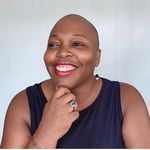
Deborah Koningferander

About the author

Deborah Bianca is a life designer and CEO who works with high-achievers navigating success that no longer fits. Her work focuses on identity, ambition, and the quiet cost of outward achievement — particularly for women who look “sorted” but feel deeply misaligned.

She coaches and professionals who are ready to redesign their lives with clarity and intention, not performance or burnout. Her writing is known for its precision, emotional honesty, and refusal to romanticise ambition. Deborah’s work sits at the intersection of leadership, self-trust, and freedom — especially for women building lives beyond inherited definitions of success.

View profile
Express interest  

1106 Design, LLC

Dear Author,

You worked hard to write your manuscript, and you know that expert assistance is needed to ready it for the market. But perhaps you didn’t realize that working with a publisher is no longer necessary—especially publishers who charge fees to produce your book upfront and "share" more of your revenue whenever a book is sold.

1106 Design is an author services company that has served over 4,000 authors since 2001. We offer all the editorial and design services you’d expect from a publisher, transforming your manuscript into a polished book. But here's the difference: we help you secure print-on-demand printing and worldwide distribution in YOUR name. This means you'll earn several dollars more for every book sold instead of a meager “royalty” and never lose control of your book or your book files.

We understand that your book is not just a passion project but also a potential source of income. No two books or authors are alike. That's why we'll customize a package of services tailored to your needs at affordable prices, starting at $5,555. And here's the best part: after this one-time investment, every penny of revenue from book sales is deposited directly to your bank account, never to ours first.

If this sounds like a better way to publish your book, I invite you to browse our services, design samples, no-surprises pricing, outstanding customer reviews, and educational articles at https://1106design.com. You can download a free PDF of my book, "Publish Like the Pros: A Brief Guide to Quality Self-Publishing and an Insider's Look at a Misunderstood Industry," and request a free, no-obligation consultation.

1106 Design is rated A+ by the Better Business Bureau. We are a “Highly Recommended Expert” at IngramSpark.com and rated "Excellent" at Alli, The Alliance for Independent Authors, at SelfPublishingAdvice.org. Alli's "watchdog list" of the best and worst publishing services companies is an invaluable resource.

How can we serve you today?

Sincerely,
Michele DeFilippo, owner

Service publisher Worldwide All categories
1106 Design, LLC logo

eBooks2go

100 copies • Completed manuscript.
eBooks2go, Inc. was founded in 2011 to provide the missing link for all your publishing needs. Our end-to-end solutions provide the guidance and support that enable publishers and independent authors to pursue their passions. To date, we have helped more than 1,000 authors and 250 publishers worldwide. We offer an array of simple and affordable solutions to assist self-publishing authors at every stage of the book publishing process. Our comprehensive service offering includes editing, print and eBook production, book marketing, cover designs, ISBN registration, and even website designs. We are a single source for all of your publishing needs.

Service publisher Worldwide 22 categories
eBooks2go logo

Chapter 1: The Conversation That Changed Everything

I wasn’t looking for an epiphany when I opened TikTok that day. Five years after losing my grandfather, my father, and the corporate job I’d grown to resent, I was scrolling mindlessly through my feed when an interview stopped me cold.
Reshma Saujani sat across from Steven Bartlett, talking about the moment she realized she could lead too. As she spoke about how girls are raised for perfection while boys are raised for bravery, a memory surfaced—one I thought I’d processed years ago.
My grandfather. His favorite chair. The afternoon he mapped out my future with three carefully chosen suggestions: nurse, secretary, flight attendant.
I’d laughed about that conversation before. Told it as a charming anecdote about different times, different expectations. But listening to Reshma describe how women internalize limitations before they even recognize them as limitations, a different question emerged—one that would reshape everything I thought I understood about my own life:
Why didn’t he suggest doctor, business owner, or pilot?
More importantly: Why did I believe, for twenty years, that I was limited to those types of jobs?
By the time that question crystallized, I was a certified confidence coach, a life designer, a CEO and founder with my primary target audience being women. I’d built businesses, moved countries, survived loss, and helped women step into their power. Yet that single conversation from 1993 had operated in my subconscious like code I never knew was running.
That realization led me on an 18-month journey across six continents to interview 15 female CEOs and leaders—women who hold power in spaces designed to exclude them. Women leading in Africa, where only 5% of CEOs are women. In Asia, where cultural expectations can be suffocating. In the Middle East, Latin America, Europe—each with distinct barriers, identical conditioning.
This book is the result of that journey. But to understand why it matters, you need to understand where it began.

Where It Started: The Counsel of a Loving Man in a Limited World

As a young woman fresh out of high school, I had no clue what I wanted to do with the rest of my life. All I knew was that I wanted to help people. I’d grown up in a community where it was second nature to help each other. Raised by my grandparents, there were many nights when people came to our door for help, and it always opened.
Nearing graduation, I sat down with my grandfather to brainstorm my options. I still remember this conversation vividly, as if it happened yesterday. He was sitting in his favorite chair in front of the TV—a big, sturdy man who instilled the love of sports in me. If there was a game on and my grandmother and I were watching an American daytime show, he would unilaterally decide it was time to watch a football match or tennis tournament. If Barca was playing, no one was getting that remote.
That afternoon has a special place in my heart because my grandfather was my biggest advocate, supporter, and cheering squad. I miss him dearly.
His first suggestion was to become a nurse.
My immediate reaction was a resounding, “No, I don’t like blood and all that gory stuff.” My very emotional outburst made him laugh.
His second suggestion was secretary. Mind you, this was in 1993, so this was a common job for women to do. He said I could learn how to type, and he was right.
His third suggestion was to become a flight attendant. To me, that made sense because I loved watching travel programs and learning about new places and cultures.
I followed two of his suggestions. You can already guess which two they were. One enabled me to type this book faster, and the other only ignited my love for travel more.

It wasn’t until many years later—until that moment watching Reshma Saujani—that I thought about our conversation differently. Not as guidance, but as limitation. Not as love, but as conditioning.

The Man Behind the Advice

My grandfather was born in Suriname in 1939, a time when the world was shaking from the start of World War II. In his small corner of the world, life moved to the rhythm of a Dutch colony still healing from the Great Depression. Bauxite mining was picking up steam as the big money-maker, pulling sturdy men like the ones he would grow into to work the earth, while families in Paramaribo and beyond scratched by with rice fields and markets buzzing with Hindustani spices, Javanese noodles, and Creole stews cooked over wood fires.
Neighborhoods were tight-knit, multi-colored communities where everyone knew your name—Creoles chatting in Sranan Tongo, Maroons sharing stories from the bush, and doors always open if someone needed rice, a hand, or just talk. Growing up through the 1940s and 1950s, he saw American soldiers roll in during the war to guard those bauxite riches for planes fighting far away, bringing new tunes like jazz on the radio and a taste of change.
Post-war, elections came for the first time in 1949, whispers of more say for locals, but daily life stayed simple—kids kicking footballs in dusty streets, kaseko music spilling from parties, church on Sundays, and school if your family could swing it. By his teens in the 1950s, the economy hummed a bit louder with Dutch money flowing in after more freedom in 1954, yet jobs like nursing, secretarial work, or dreaming of flights to Europe shaped what big dreams looked like back then.
It was a sturdy, community-rooted world that built men like him—strong, practical, always ready to open the door.
He was your typical Surinamese man who provided for his family with traditional thinking, but being his granddaughter, I enjoyed many liberties that my aunt did not. He simply wanted me to have a good life with a steady job. He didn’t know better. He couldn’t imagine what he’d never seen.
And so he gave me the best future he could picture: one where I would be safe, employed, and useful.

Just never in charge.

The Path I Took (Because I Didn’t Know There Were Others)

After high school, I followed my grandfather’s advice and signed up for a course to become a secretary. I still vividly remember the white, sterile classroom and the excitement of starting something new. At that time, we didn’t have laptops—only typewriters. Yes, the prehistoric ones. My grandfather bought me one so I could practice at home.
Accounting was part of the curriculum, and I barely lasted a year. What I did learn was that numbers were still my weakest subject. At least I walked away knowing how to touch type.
After that, I enrolled in fashion school. I wanted to make beautiful clothes, but I quickly realized it was far more technical than I had imagined. It was autumn, and I had to go out and collect different colored leaves to create a color palette. Boring. I don’t remember how long I lasted there, but it wasn’t long either.
The one program I did complete was World Travel School, to become a flight attendant or work in the travel industry. This truly lit me up, so finishing it was easy. I didn’t become a flight attendant, but I did end up working at Amsterdam Airport for several years. Those were great times.

When I left the Netherlands to work in Dublin, I was hired solely for my language skills. They needed a Dutch speaker, and I spoke Dutch. Simple. I decided early on that until I knew what I truly wanted to do, I wouldn’t go to college. I had no university degree, yet they hired me and trusted me. I was even promoted when I put in a bit of extra effort.

Dublin: Where the Walls Started to Crack

I won’t be able to tell you the exact moment it happened, but gradually I started to believe that I could do and be anything I wanted to be. Through conversations with friends and personal development programs, I got to know myself on a more intimate level because I had to step out of my shell and into the bustling life of Dublin. If you’ve ever been, you know what I mean.
Here is where I learned true independence and what it means to dream big, because the environment I grew up in did not promote that. They promoted the standards set by society, but I was always a bit of a rebel who did not like the conventional way of being—hence my move.
The pivotal moment came when my old colleague and I started a conversation about whether we saw ourselves in the same company five years from then. We both did not.
I started to do some digging into what I loved doing, and it became clear that I was truly a child of my grandfather. He used to organize parties in venues and on boats and was “famous” for them. I remember him coming home with bags of money and having me sort the bills. I was always planning events and parties with friends in my teens and twenties.
Fast forward to Dublin, and my colleague and I were the organizers for our team events, so it didn’t take long for me to decide which direction I wanted to go in. I got my diploma in Event Management & PR.
I started looking for jobs in that field, but none spoke to me. At that time, I was introduced to BTS, and they inspired me to start my own event management business called KoreaCon Ireland. It was me and two other younger girls with a dream of organizing events related to everything having to do with South Korea and K-pop.
This was the moment I decided to challenge the narrative I’d inherited—that I was confined to the roles created for us.
For the first time in my life, I became a CEO, and I loved it.

The precedent was set, and there was no way back for me.

When Life Breaks You Open

Our first event was a success. We had a total of about 50 people who traveled from all over Ireland to join our event where we had a dance contest with K-pop music and merch as prizes. We went shopping in the local K-pop shop and had Korean food to end the day.
It was a special day, but life had other plans for me.
Before we even held the event, my father was diagnosed with cancer. While I was traveling back and forth between Dublin and Amsterdam every other week sharing the care with my aunt, working a full-time job, I still managed to organize and run the event without a hitch. So whoever came up with this concept that women are incapable of leadership can take several seats.
If it wasn’t for the pandemic, KoreaCon would’ve become something much bigger. But this was exactly the time that my life made a dramatic shift.
Within nine months, and just as I started to recover from the physical strain of the previous months, my grandfather fell ill and passed away as well. Plus I lost that job I did not want to do in five years.
Life has a funny way of making your words come true, doesn’t it?
Luckily, I had amazing friends who offered me a roof over my head and the time to find a new place to stay and another job. The company gave us some parting cash that helped ease the anxiety of being broke.

I felt very lost after this. All I knew was that I no longer wanted to live this particular life.

The Woman Who Stayed

My advocacy for women doesn’t stem solely from my own experience. It comes from watching my grandmother stay in a life she once tried to escape from.
My grandfather, as loving as he was, turned into a whole different person when intoxicated, and my grandmother was the only recipient of that person’s wrath. As was common in those times, she chose to stay because of her three children. The fact that she didn’t finish school and got pregnant at a young age made her circumstances that much harder.
In my eyes, she was a strong woman in a situation that, if she had the right support, would’ve found her way out of.
After my certification as a confidence coach, and after months deciding what kind of coach I wanted to be and who I wanted to help exactly, I came to the conclusion that my ultimate goal in life was to provide resources for women in developing countries to make them self-sufficient and self-reliant. I’m talking grants, scholarships, internships.
I want to do my part in making sure women no longer stay trapped in a life they want to escape from, and this book will open up a world of opportunities for them. They will see that women from different backgrounds, ethnicities, and continents were able to create a beautiful life for themselves despite the challenges. They fought when needed to get to where they are.

This is why I spent 18 months interviewing women globally.

The Numbers Tell a Story My Grandmother Lived

Globally, women control only 1–2% of land ownership despite producing up to 80% of food. Seventy-five percent of women worldwide lack access to bank loans. In developing countries—places like the Suriname where my grandparents built their lives—the gap between potential and possibility remains a chasm carved by conditioning, not capability.
This isn’t theory. It’s $12 trillion in lost global GDP. It’s 132 million girls out of school. It’s 131 years until gender parity at our current pace.
But what the data doesn’t capture is the specific moment a woman internalizes the lie. The conversation with a grandfather who suggests nurse, secretary, flight attendant—never doctor, business owner, pilot. The global study that found by age six, girls across 32 countries already see themselves as less brilliant than boys.
The interviews in this book are not about success stories. They’re about the passive-aggressive remarks, the moments of doubt, the specific strategies used to navigate boardrooms built for men. Because the woman running a tech company in Lagos faces different structural barriers than the CEO in São Paulo, but both were taught the same foundational lie: leadership isn’t for you.
This book funds something bigger. Every copy sold builds toward grants, scholarships, and internships for women in developing countries—the places where that $1.7 trillion financing gap hits hardest. Where 75% of women can’t access bank loans. Where my grandmother’s story still plays out daily.
Because when women lead, child nutrition improves 20 times more than when men earn the same income. Companies with women in leadership see 21% higher profitability. Women reinvest 90% of their income into families and communities.

The 15 women in this book are proof. Not exceptions.

What I Learned From Editing Myself

Climbing the corporate ladder was never a dream of mine, but I did admire women in senior positions. The way they spoke, how they carried themselves—I found them striking. Still, I didn’t see myself in them, because they didn’t represent me.
I grew up in a time without social media. My world was shaped by what I saw on television, and back then, you believed what they showed you and what they told you. Now we know better.
Although I was competent and respected in my corporate roles, I became increasingly aware that there were rooms and conversations I didn’t want to be part of. The politics. The inauthenticity. You hear people talk about office politics and favoritism—I’ve seen it in real time.
This is not a victim story. I never felt like one. I wasn’t invisible or chronically overlooked, because I never put myself in those positions.
Writing this now, I realize that decision came from fear. Fear that I wasn’t capable enough, smart enough, or worthy of those roles—because growing up, I never saw myself reflected in them.
Funny how these things become clearer with age.
My struggle was different.
I was capable, but careful.
Visible, but edited.
I was honest, but selective—without realizing I was operating from a deeply embedded system.

And that’s where containment quietly lives—in the self-editing, the careful calculations, the rooms we don’t enter. My hope is that through this book, many women will realize that they are not invisible; they are self-edited. And there is a way to overcome that.

What Comes Next

The women you’re about to meet didn’t wait for permission. They didn’t apologize for taking up space. They didn’t shrink themselves to fit into frameworks designed for someone else.
They are leading in tech, finance, policy, healthcare, and education. They are African, Asian, European, Latin American, Middle Eastern. They are mothers and childfree. They are immigrants and native-born. They are breaking glass ceilings and building entirely new structures.
And they all started exactly where you might be right now: wondering if leadership could ever look like them.
This book is proof that it can.
This book is proof that it does.
Leadership looks like you.

What This Book Funds

This book funds something bigger.

Every copy sold builds toward grants, scholarships, and internships for women in developing countries—the places where that $1.7 trillion financing gap hits hardest. Where 75% of women can't access bank loans. Where my grandmother's story still plays out daily.

Because when women lead, child nutrition improves twenty times more than when men earn the same income. Companies with women in leadership see 21% higher profitability. Women reinvest 90% of their income into families and communities.

The fifteen women in this book are proof. Not exceptions.

The Interviews to Come

Over the next chapters, you'll meet:


  • The tech CEO who was told women don't understand algorithms

  • The finance executive navigating machismo at every board meeting

  • The entrepreneur in who built her company while her family arranged her marriage

  • The venture capitalist who heard "too aggressive" every time she negotiated

  • The founder who couldn't get a business loan without her husband's signature

Each interview reveals the common thread: brilliant women, different continents, identical conditioning.

And the precise moment they decided to stop believing it.

These conversations aren't motivational. They're tactical. They're honest. They name what's rarely said out loud in professional spaces—the gendered double binds, the invisible taxes, the specific language used to diminish authority.

But more importantly, they reveal the strategies that worked. Not theory. Not inspiration. Proof.

Because my grandmother didn't need platitudes. She needed options.

And so do the 132 million girls currently out of school. The 75% of women without access to capital. The brilliant women reading this who've been told—subtly, repeatedly, systemic—that leadership isn't for them.

This book is for them.

And it's funded by you.


The author hasn't added any updates, yet.

Please log in to comment.

Rewards

$15

Tier 1 - eBook

0 readers

Receive a digital copy of Leadership Looks Like Her

Includes:

  • 1 digital copy
Free shipping

$25

Tier 2 - Physical copy

0 readers

Receive a physical and digital copy of Leadership Looks Like Her

Includes:

  • 1 digital copy
  • 1 physical copy
Free shipping

$50 47 €

Tier 3 - The Witness

0 readers

Entry point to the complete Leadership Looks Like Her movement—your all-access digital vault unlocks unfiltered wisdom from 15+ global women leaders that transforms mindsets instantly, without waiting for shipping.

Upon completion, instant digital access to Leadership Looks Like Her: A Global Movement in ebook and physical format, plus the complete professional audiobook + podcast. Listen anywhere, anytime—on your commute, during workouts, or while building your own leadership journey. This is the most accessible way to join the movement.

Includes:

  • 1 digital copy
  • 1 physical copy

$100 97 €

Tier 4 - The Circle

0 readers

Physical heirloom edition with your name etched in Founders Circle history—becoming part of an exclusive legacy etched into the book's opening pages alongside the world's rising women leaders.

Includes:

  • 1 physical copy
Free shipping

$500 497 €

Tier 5 - The Inner Circle

0 readers

Physical heirloom edition with your name etched in Founders Circle history - becoming part of an exclusive legacy etched into the book's opening pages alongside the world's rising women leaders.

Private 12-month mastermind with 15 hand-selected global CEOs— hot-seat coaching, deal-making introductions, and accountability that catapults your business into 7-figures alongside elite founders.

Includes:

  • 1 physical copy
Free shipping

$50000 47000 €

Tier 6 - Anchor Partner – Complete Founding Package

0 readers

You are not just backing a book. You are founding a global movement.

As an Anchor Partner, you receive:

Everything above (signed book, audiobook, podcast, mastermind year 1)

Founding Partner recognition in the book front matter, all marketing materials, website, and podcast

Strategic partnership position in the movement ecosystem

Annual impact reporting tracking global reach and outcomes

Direct relationship with Deborah Bianca for ongoing strategic alignment

First access to future movement expansions, courses, and offerings

Private annual call with Deborah and key featured CEOs to shape the direction of the movement

Your investment doesn't just fund a book—it anchors a legacy. You become part of the founding story of Leadership Looks Like Her: A Global Movement.

Includes:

  • 1 physical copy
Free shipping 2 of 2 left